

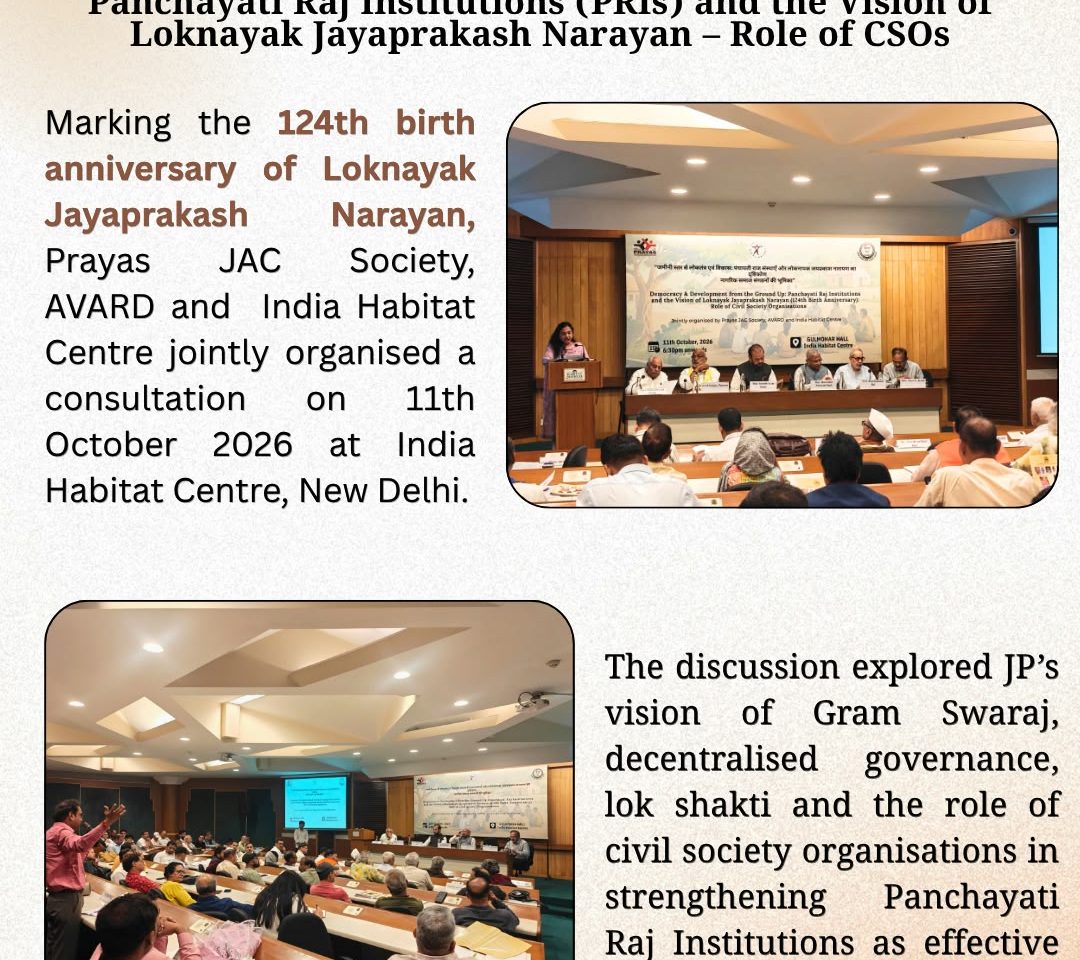
Democracy & Development from the Ground Up: Panchayati Raj Institutions (PRIs) and the Vision of Loknayak Jayaprakash Narayan – Role of CSOs
Marking the 124th birth anniversary of Loknayak Jayaprakash Narayan (JP), Prayas JAC Society, India Habitat Centre (IHC) and the Association of Voluntary Agencies for Rural Development (AVARD) jointly organised a consultation on “Democracy & Development from the Ground Up: Panchayati Raj Institutions (PRIs) and the Vision of Loknayak Jayaprakash Narayan – Role of CSOs” at India Habitat Centre, New Delhi.
The discussion explored JP’s vision of Gram Swaraj, decentralisation and people’s participation in governance, highlighting the need to strengthen Panchayati Raj Institutions as effective units of self-government. Speakers called for the devolution of all 29 subjects under the Eleventh Schedule, with adequate functions, funds and functionaries, alongside stronger Gram Sabhas, social audits, decentralised planning and capacity-building of elected representatives, particularly women.
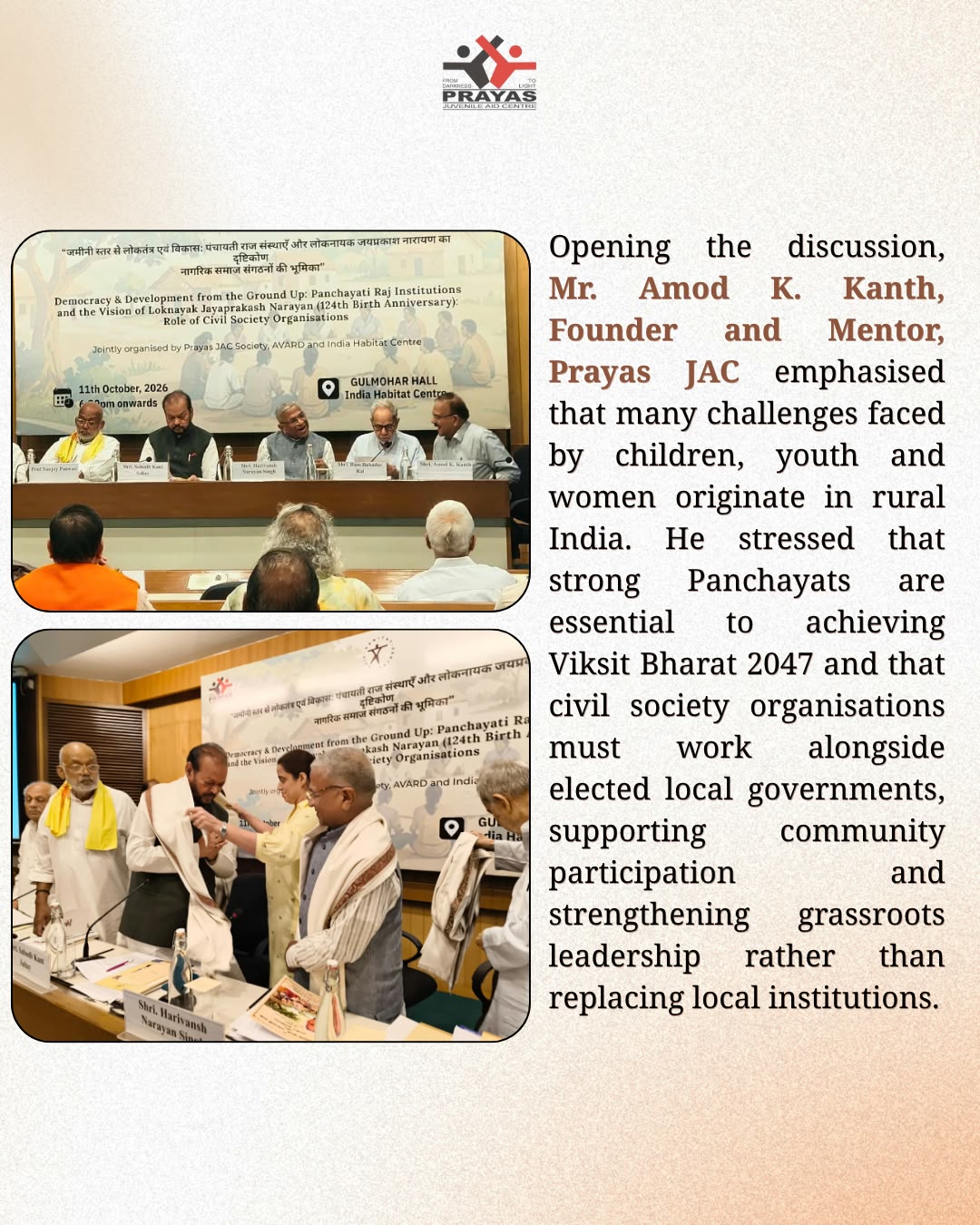
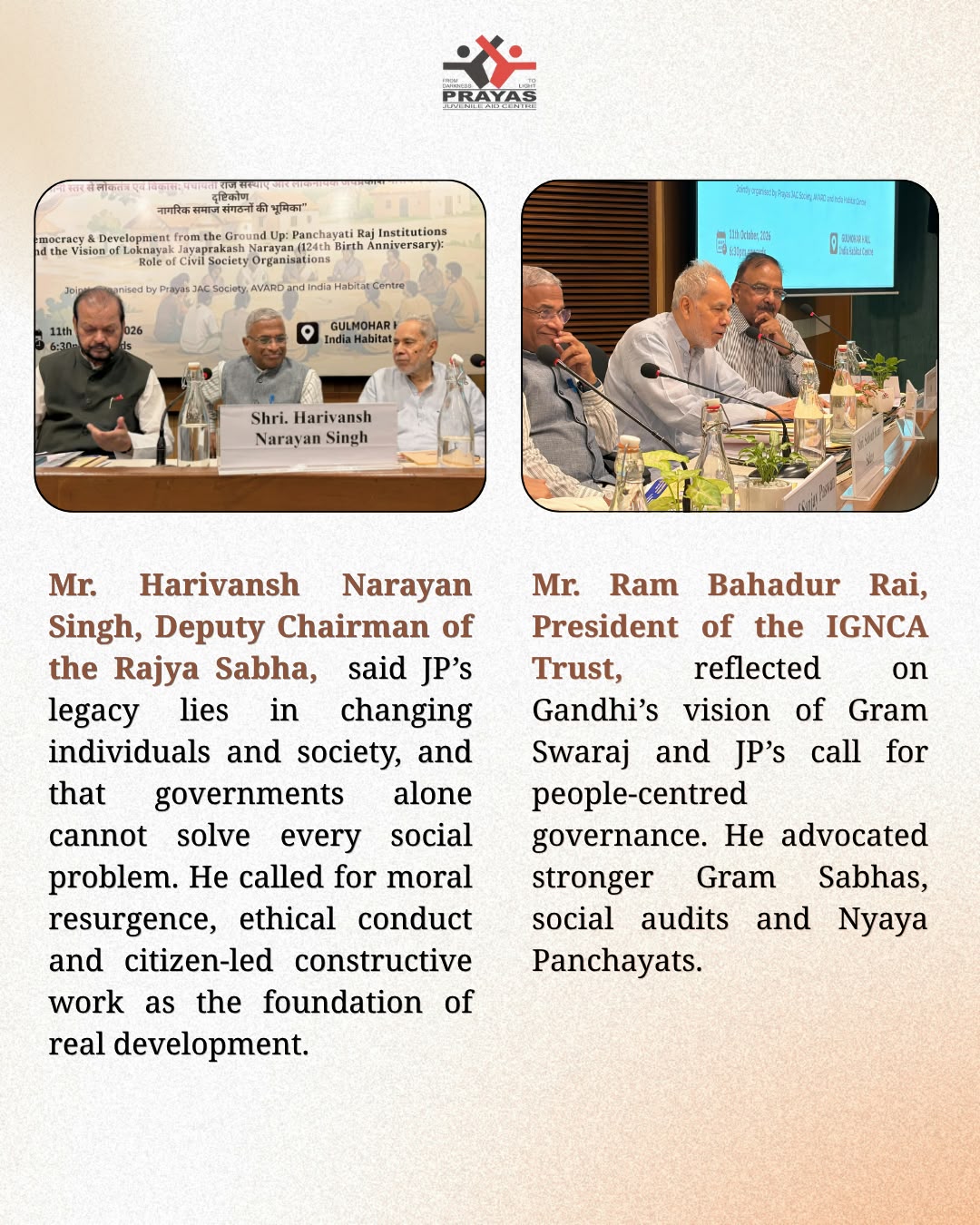
Mr. Amod K. Kanth, Founder and Mentor, Prayas JAC Society, emphasised that strong Panchayats are essential to achieving Viksit Bharat 2047, noting that many challenges affecting children, youth and women originate in rural communities. He stressed that civil society organisations must complement elected local governments rather than replace them.
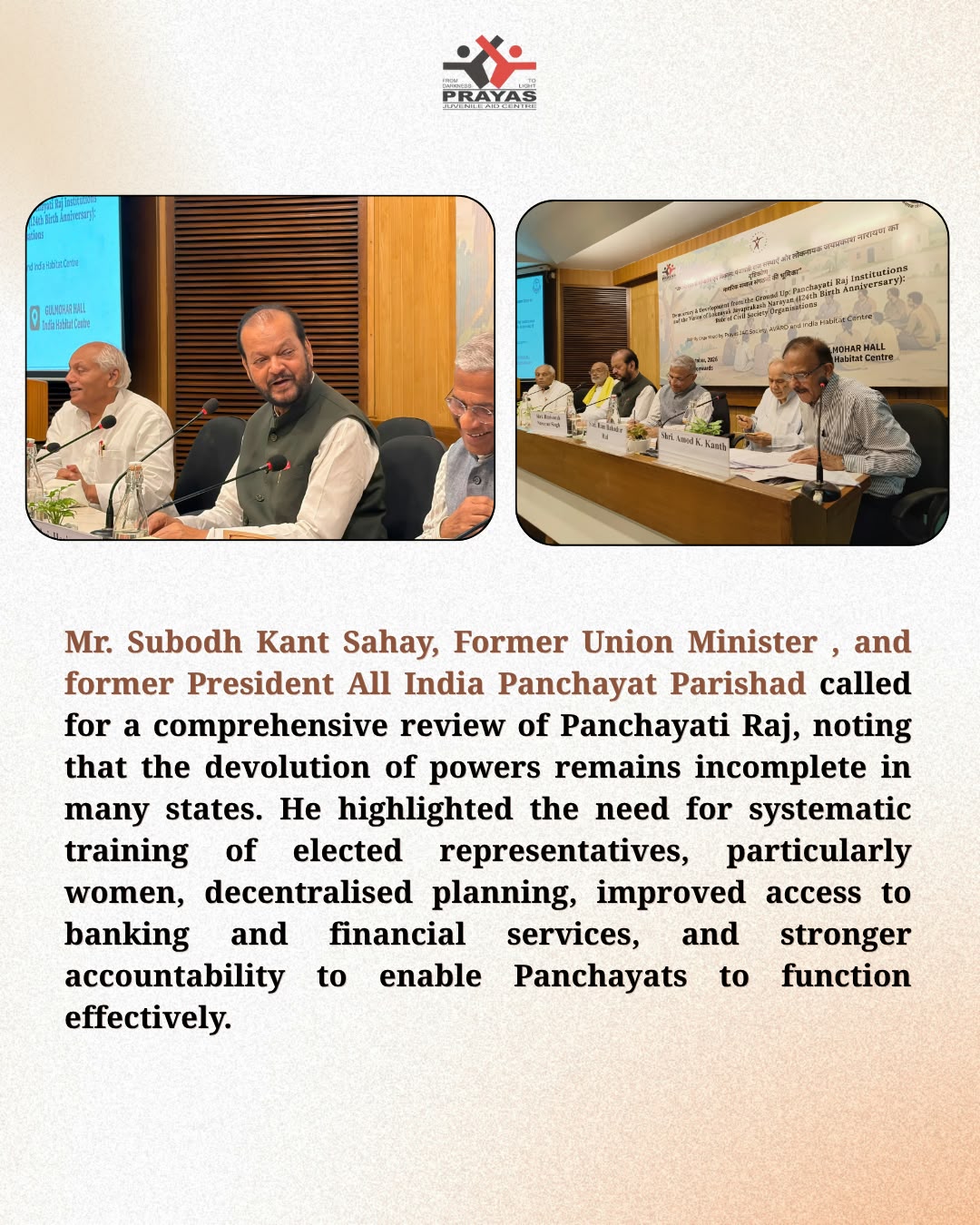
Mr. Subodh Kant Sahay, former Union Minister of Tourism, called for comprehensive Panchayati Raj reforms, stronger devolution of powers, leadership training and greater accountability. Mr. Ram Bahadur Rai, veteran journalist and President of the IGNCA Trust, reflected on Gandhi’s vision of Gram Swaraj and JP’s call for people-centred governance. He advocated stronger public participation, regular Gram Sabha meetings, social audits and consideration of Panchayats’ inclusion in the Concurrent List, along with the establishment of Nyaya Panchayats.
Shri Harivansh Narayan Singh, Deputy Chairman of the Rajya Sabha, highlighted JP’s legacy of social transformation, ethical conduct and citizen-led constructive action. Prof. Sanjay Paswan, former MP, stressed leadership development and greater awareness of the role of PRIs in achieving the Sustainable Development Goals (SDGs).
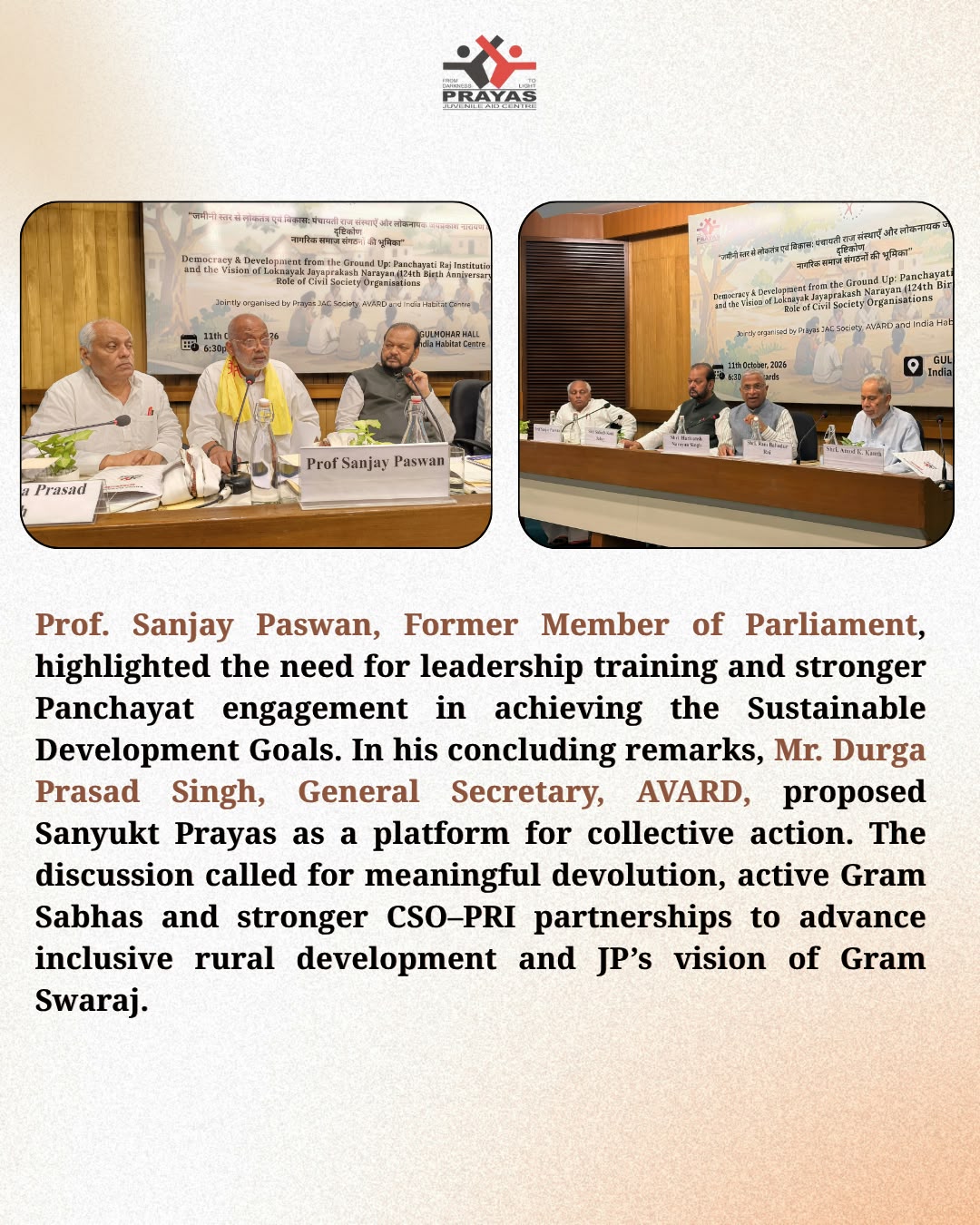
In his concluding remarks, Mr. Durga Prasad Singh, General Secretary, AVARD, proposed building a platform, Sanyukt Prayas (collective efforts), to strengthen community participation, nurture local leadership and advance inclusive rural development.
Founded in 1988, Prayas JAC Society works with marginalised children, youth and women across India, while AVARD, established in 1958, has a longstanding association with JP’s vision of voluntary action and rural development. Their collaboration underlines the important role of civil society in strengthening grassroots democracy.
The consultation reaffirmed that realising JP’s vision of Gram Swaraj requires empowered Panchayats, active citizen participation and sustained collaboration between government and civil society to advance inclusive development and the vision of Viksit Bharat 2047.