

Alternative and Innovative Education for Out of School Children (OOSC) and Socio Economically Disadvantaged Groups (SEDGs): The Role of CSOs
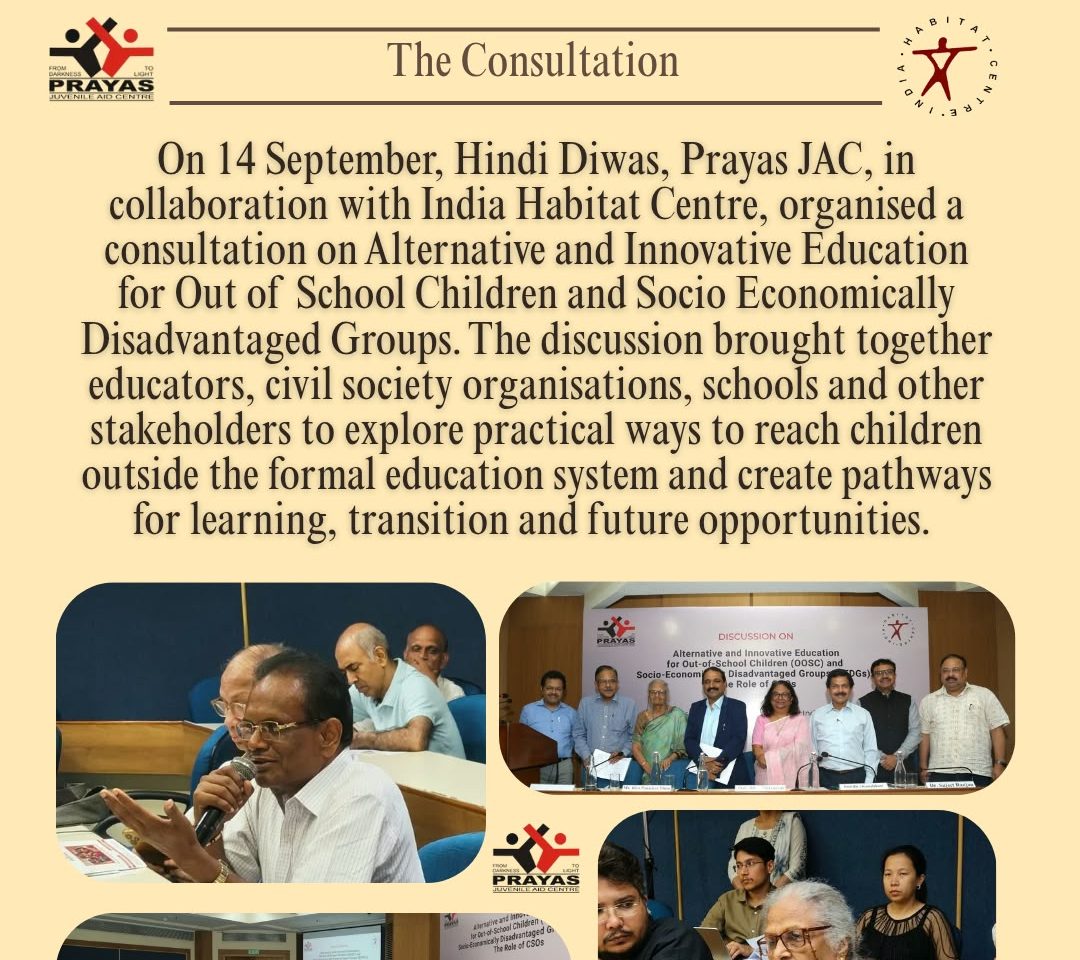
Addressing the challenge of educational exclusion, Prayas Juvenile Aid Centre (JAC) Society, in collaboration with India Habitat Centre (IHC), organised a consultation on “Alternative and Innovative Education for Out-of-School Children (OOSC) and Socio-Economically Disadvantaged Groups (SEDGs): The Role of CSOs” at IHC, New Delhi.
The consultation brought together educationists, government representatives, civil society organisations and other stakeholders to discuss barriers to education and explore flexible pathways for children unable to access or continue in formal schooling. Discussions focused on alternative education, bridge courses, remedial support, identification and tracking, retention, open schooling and vocational training.
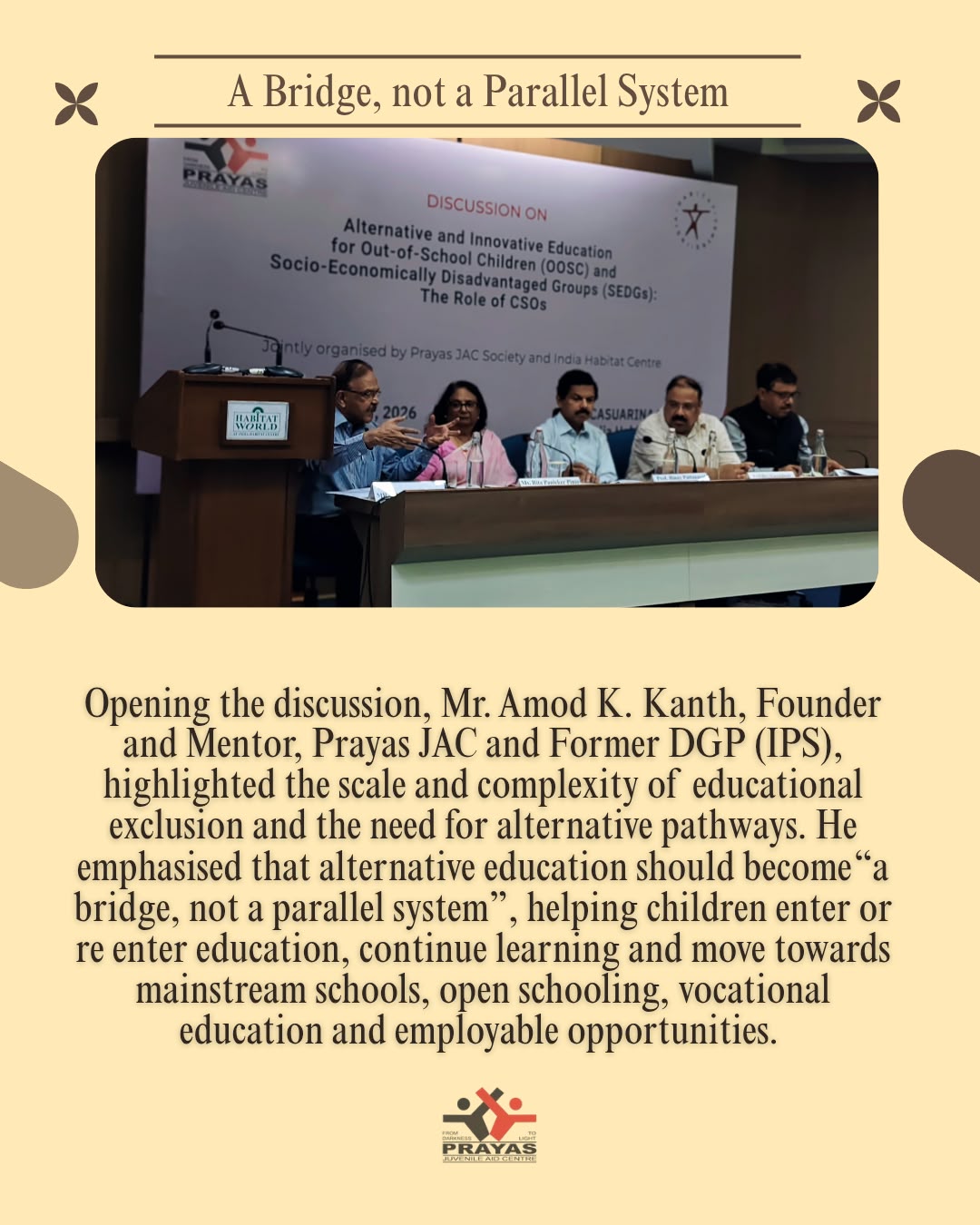
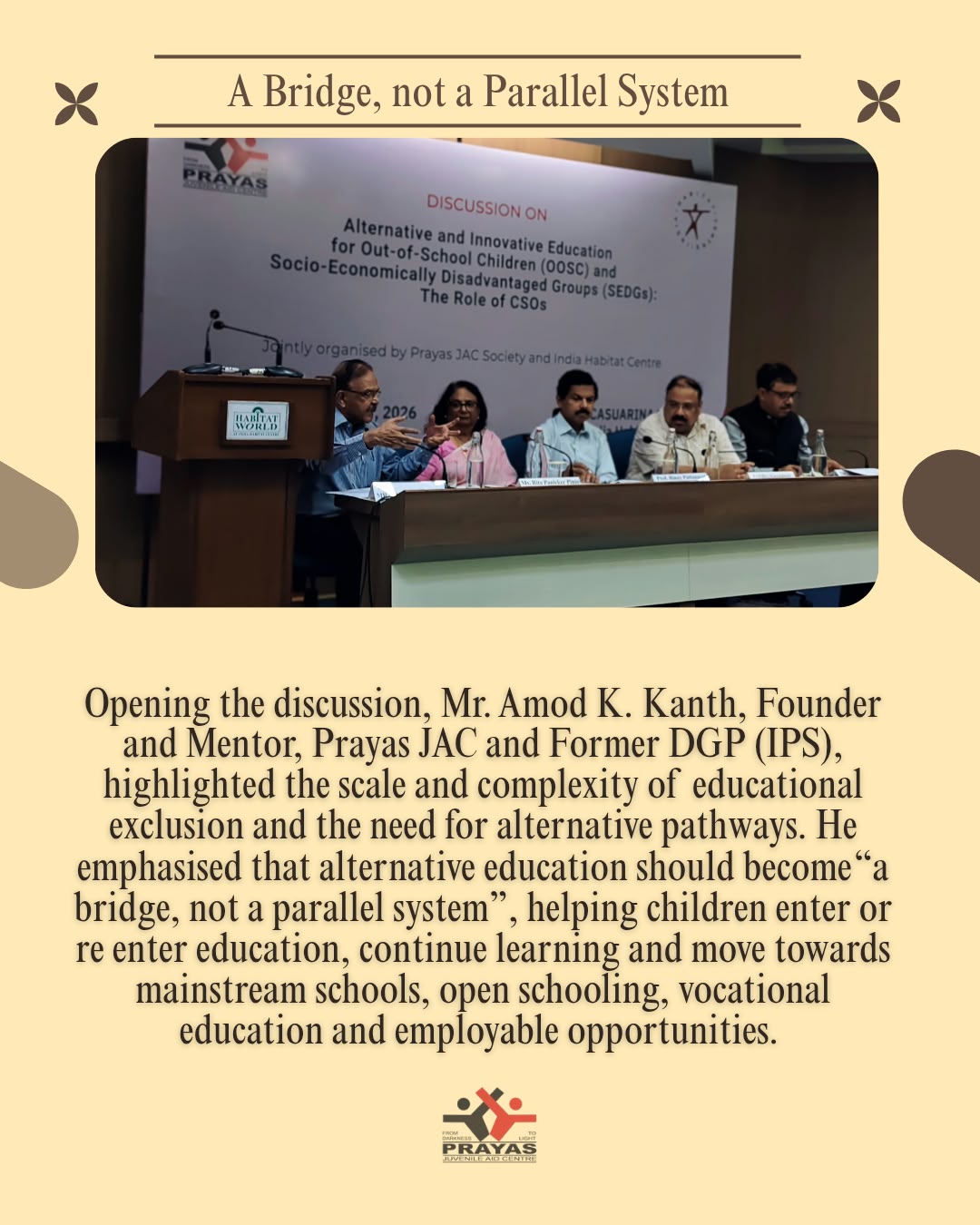
Moderating the discussion, Mr. Amod K. Kanth, Founder and Mentor, Prayas JAC Society and Former DGP (IPS), highlighted the scale of educational exclusion and the need for alternative pathways. Referring to national education data, he emphasised that enrolment alone is insufficient and called attention to children facing homelessness, migration, poverty and other vulnerabilities, as well as the growing number of young people not in education, employment or training (NEET).
Ms. Rita Panicker Pinto, Executive Director, Butterflies, emphasised the importance of community-based identification and collaboration between government departments and CSOs. She described civil society organisations as vital last-mile partners in helping children return to education through learning centres, bridge courses, remedial support and vocational pathways.
Prof. (Dr.) Kamalakant Biswal, NIEPA, Ministry of Education, Government of India, highlighted gaps in education data, the need for household-level information, improved teaching practices and locally relevant learning approaches. Dr. Sujeet Ranjan, Chief Executive Officer, United Way of Delhi, stressed a life-cycle approach to education, linking enrolment with learning, retention, parental engagement and transitions to higher education and livelihoods.
The consultation also highlighted the role of education in protecting children from child labour, trafficking, child marriage, abuse and exploitation. Experiences shared by Prayas, Butterflies, Railway Children, Jamia Hamdard, schools, IPF and other civil society organisations demonstrated the importance of community outreach, sustained follow-up, open schooling and flexible learning models.
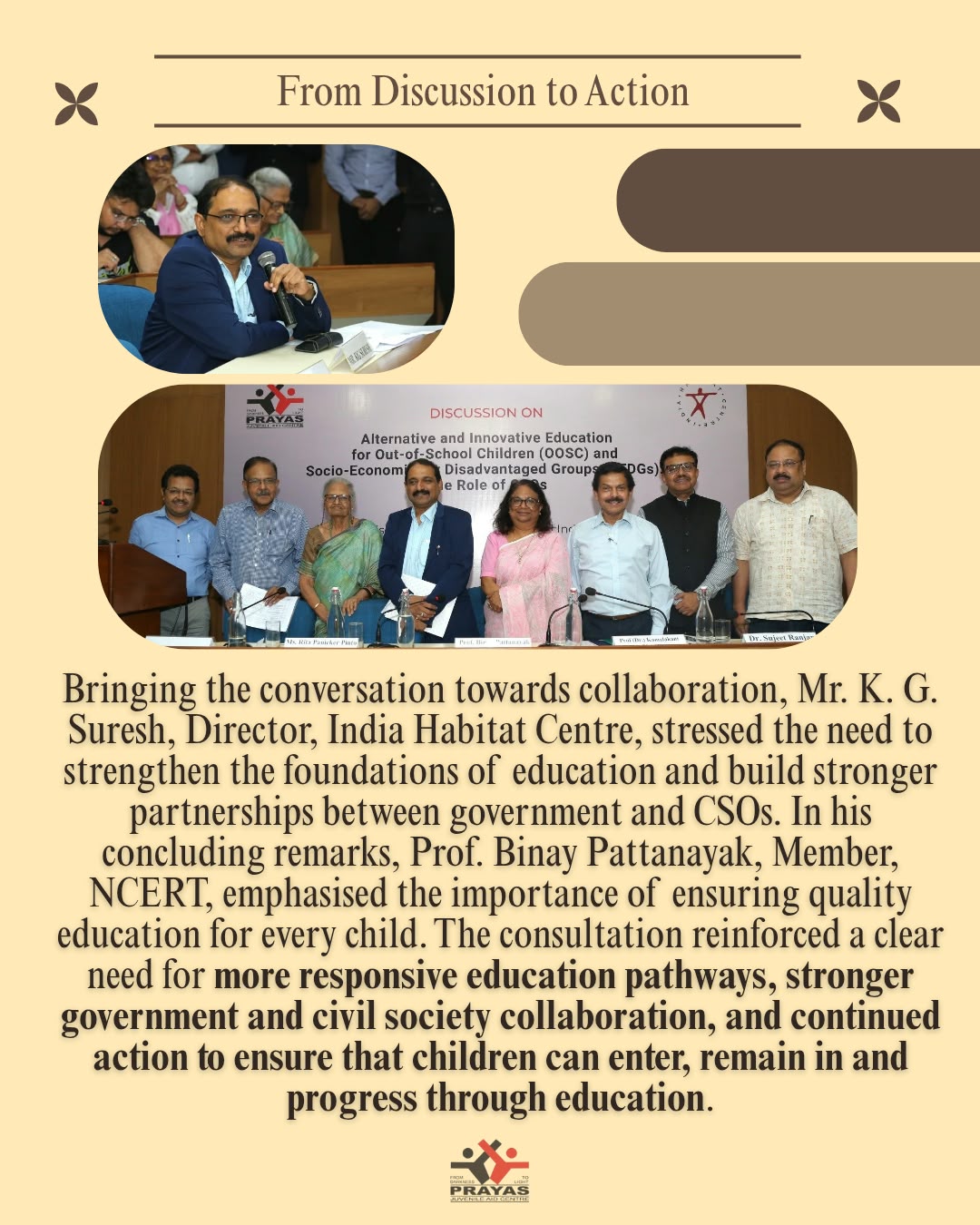
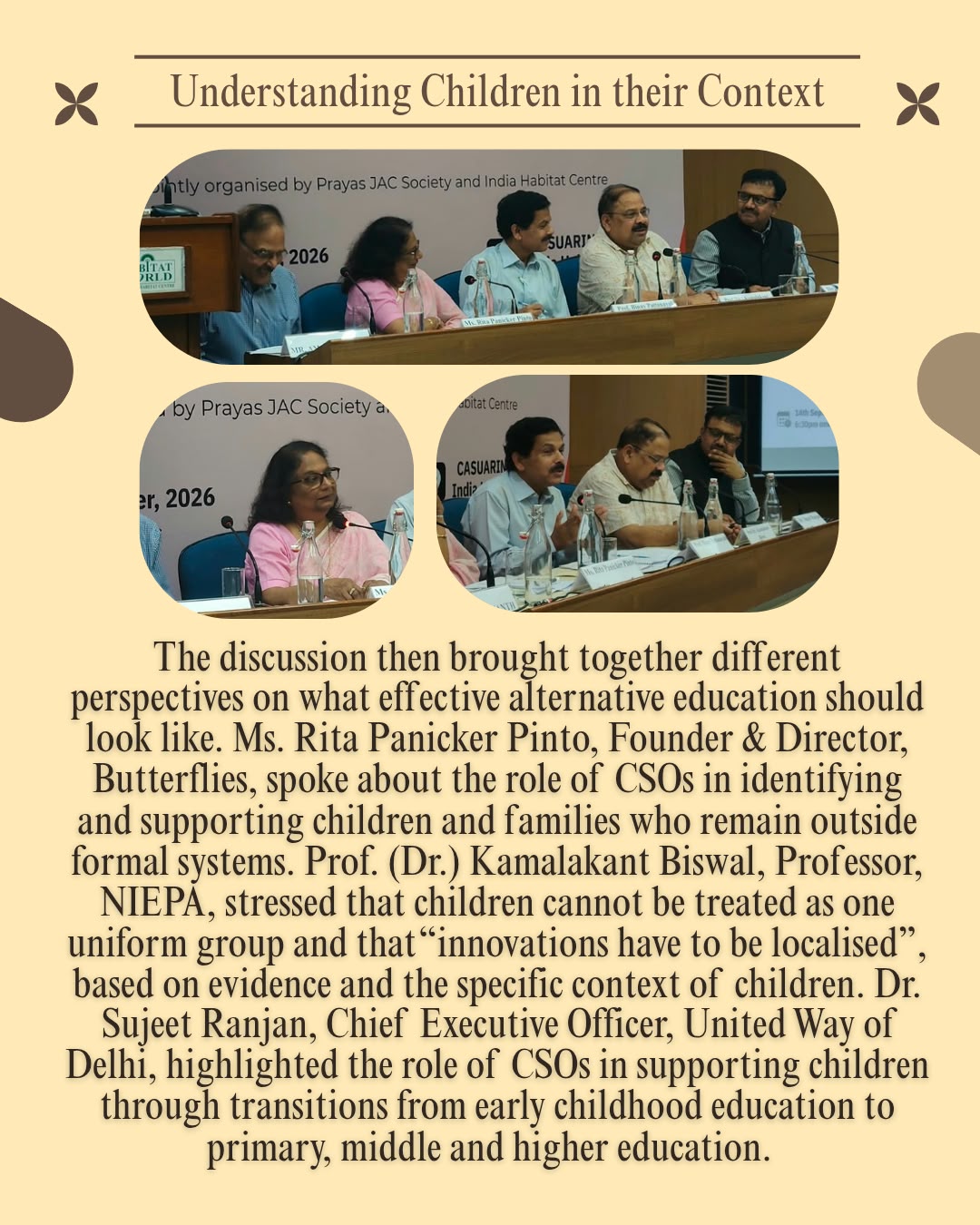
In his concluding remarks, Prof. Binay Pattanayak, Member, NCERT, and Chief Consultant, NSTC Programme Office, NCERT, stressed that bringing children into school must go hand in hand with quality education. He underlined the role of School Management Committees, Panchayati Raj Institutions, NIOS and CSOs in creating responsive and inclusive educational pathways.
With over 35 years of experience, Prayas JAC Society works through alternative education centres, bridge courses, remedial education, NIOS pathways, community libraries and participatory learning. Its 330 centres and units reach approximately 45,000–50,000 beneficiaries daily across 12 States and Union Territories. The organisation has supported nearly 2.98 lakh children and provided vocational training to over two lakh marginalised youth and women.
The consultation concluded with a collective call for stronger collaboration among government, schools, civil society organisations and communities to ensure that every child has access to meaningful education, skills and future opportunities.