

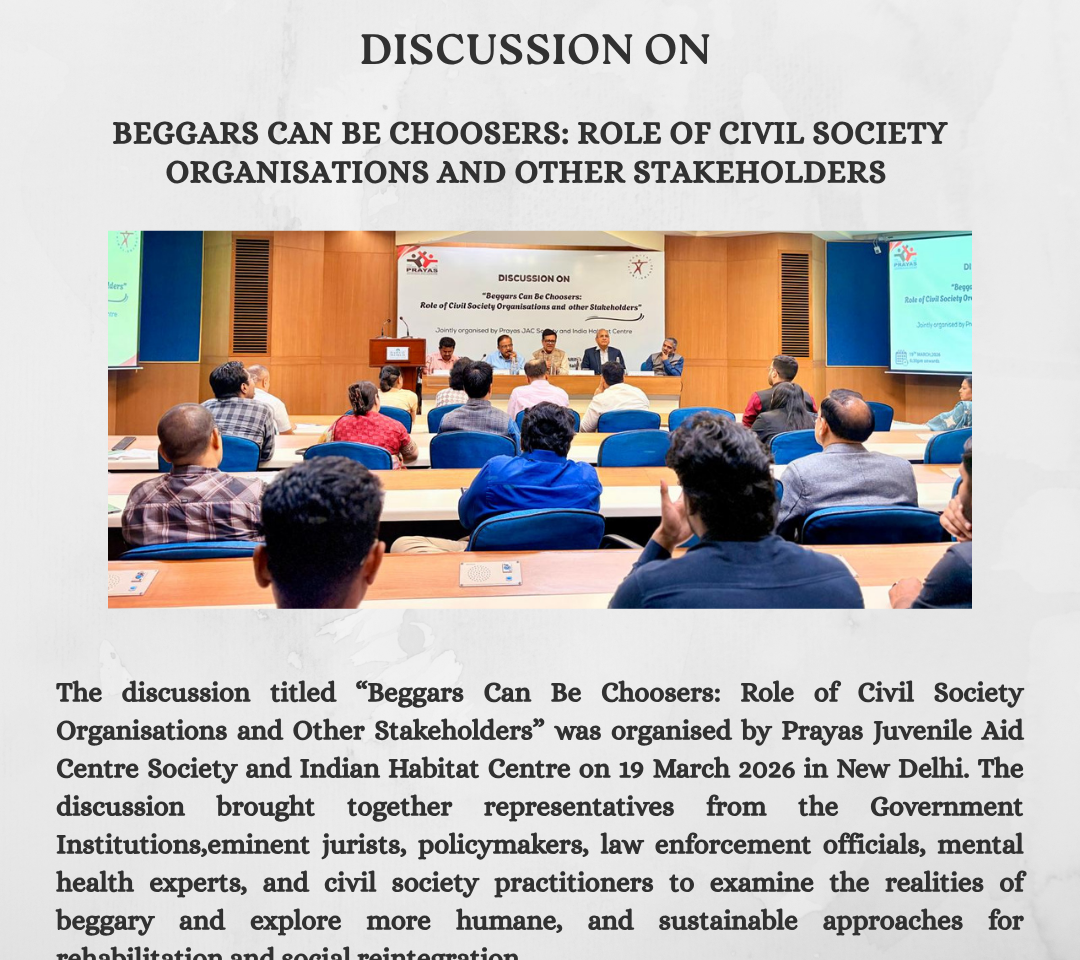
Beggars Can Be Choosers: Role of Civil Society Organisations and Other Stakeholders
Beggary & Rehabilitation: A Multi-Stakeholder Discussion
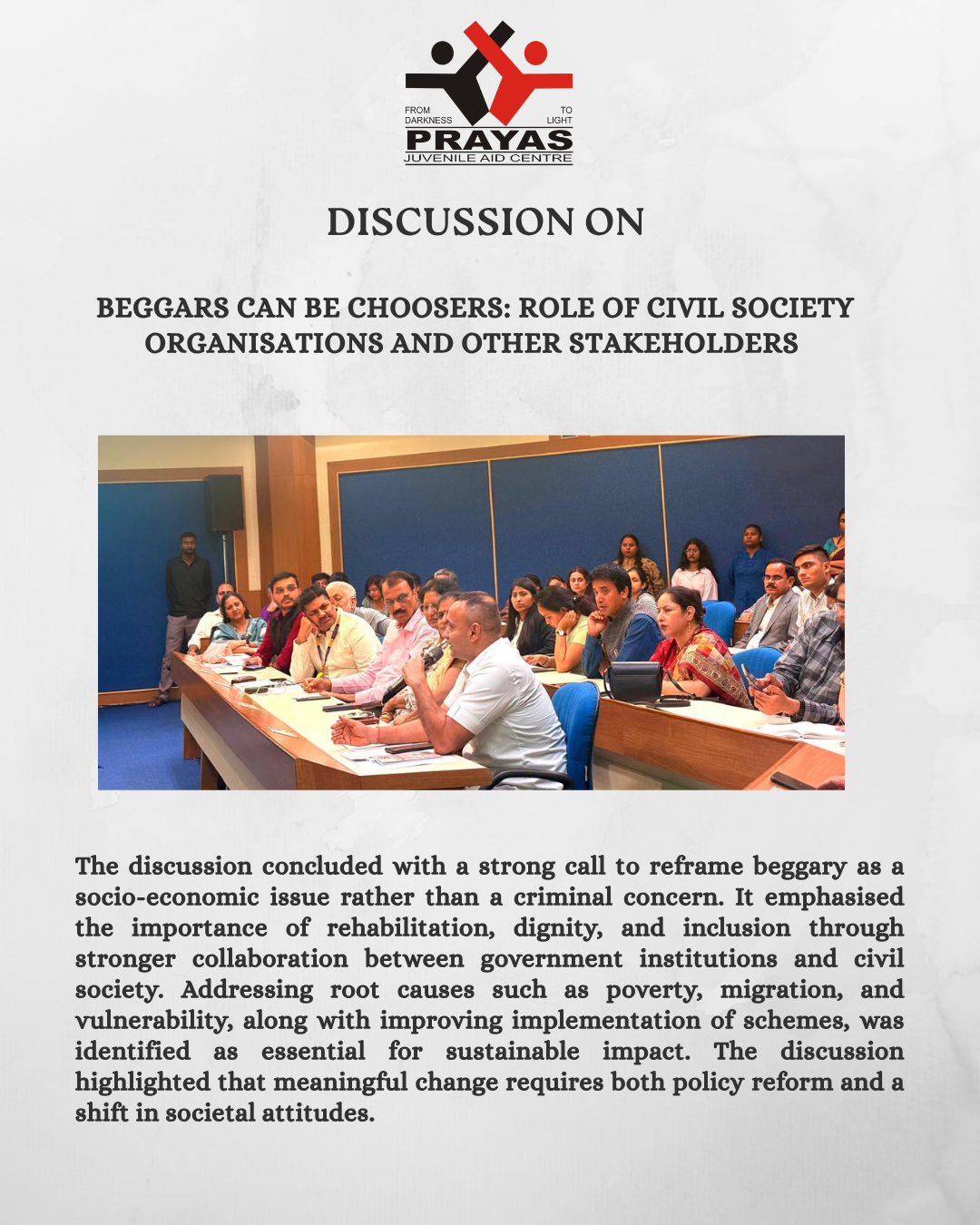
Prayas Juvenile Aid Centre Society, in collaboration with India Habitat Centre, hosted a multi-stakeholder discussion on beggary and rehabilitation in New Delhi, bringing together government representatives, jurists, policymakers, law enforcement officials, mental health experts, and civil society practitioners. The discussion aimed to examine the complex realities of beggary and identify humane and sustainable approaches for rehabilitation and social reintegration.
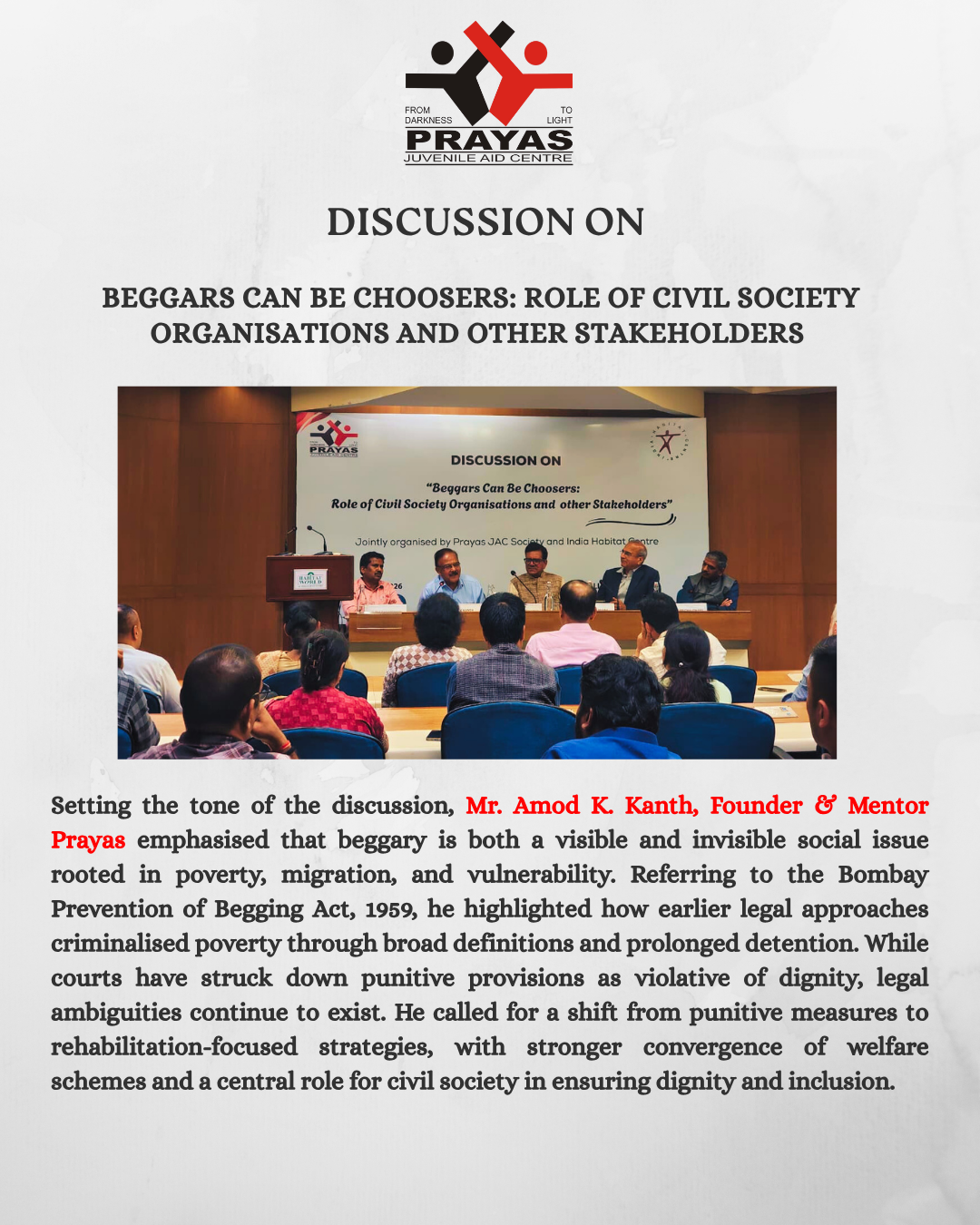
Setting the Context
Mr. Amod K. Kanth, Founder & Mentor, Prayas, highlighted that beggary remains both a visible and invisible social issue rooted in poverty, migration, and vulnerability. Referring to the Bombay Prevention of Begging Act, 1959, he noted that earlier legal frameworks criminalised poverty and often led to prolonged detention. While judicial interventions have struck down several punitive provisions, ambiguities persist. He emphasised the need to move towards rehabilitation-focused approaches, with stronger convergence of welfare schemes and an active role for civil society.
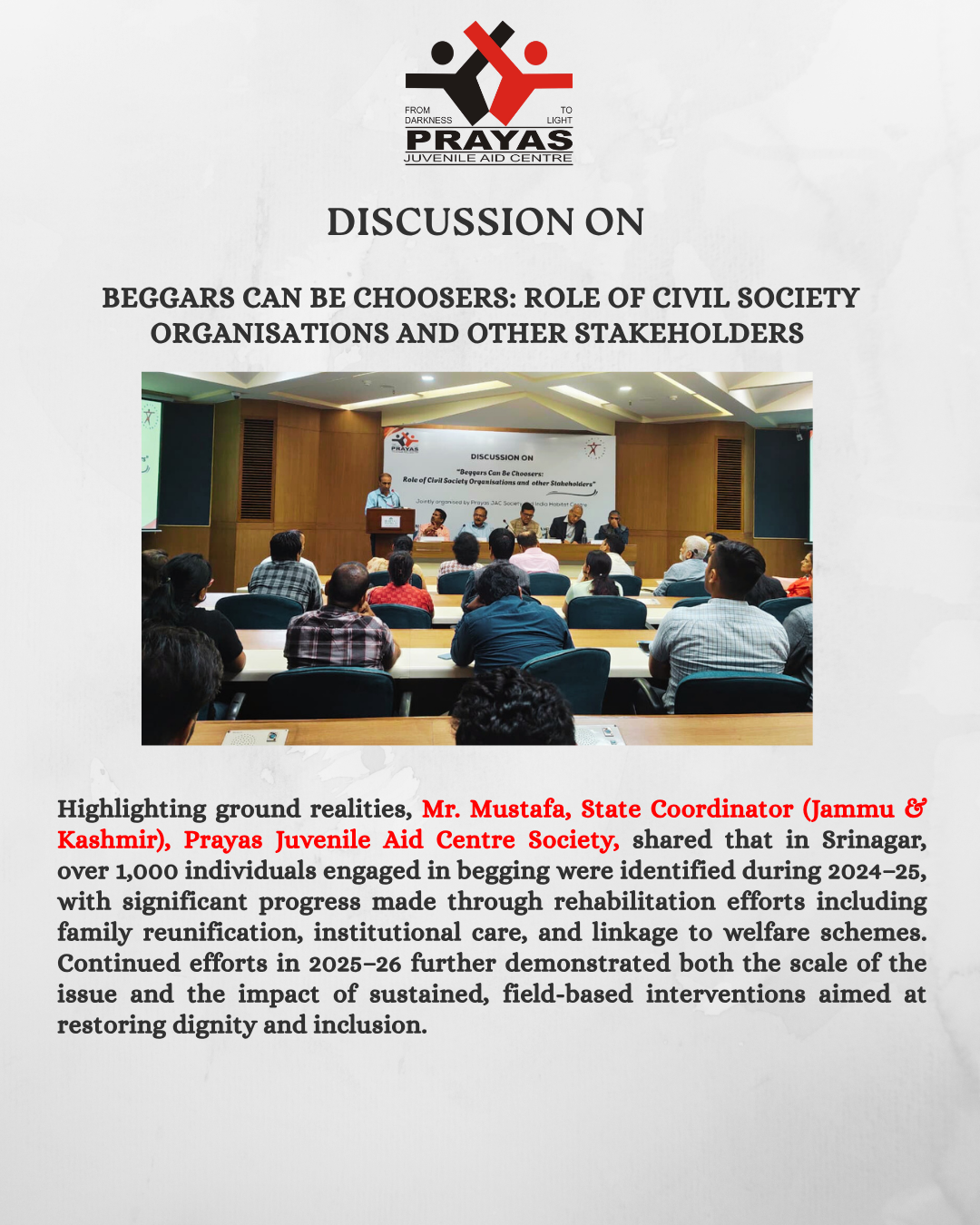
Field Insights — Jammu & Kashmir
Mr. Mustafa, State Coordinator (Jammu & Kashmir), Prayas, presented findings from Srinagar, where over 1,000 individuals engaged in begging were identified during 2024–25. Rehabilitation efforts — including family reunification, institutional care, and welfare linkages — have shown measurable progress.
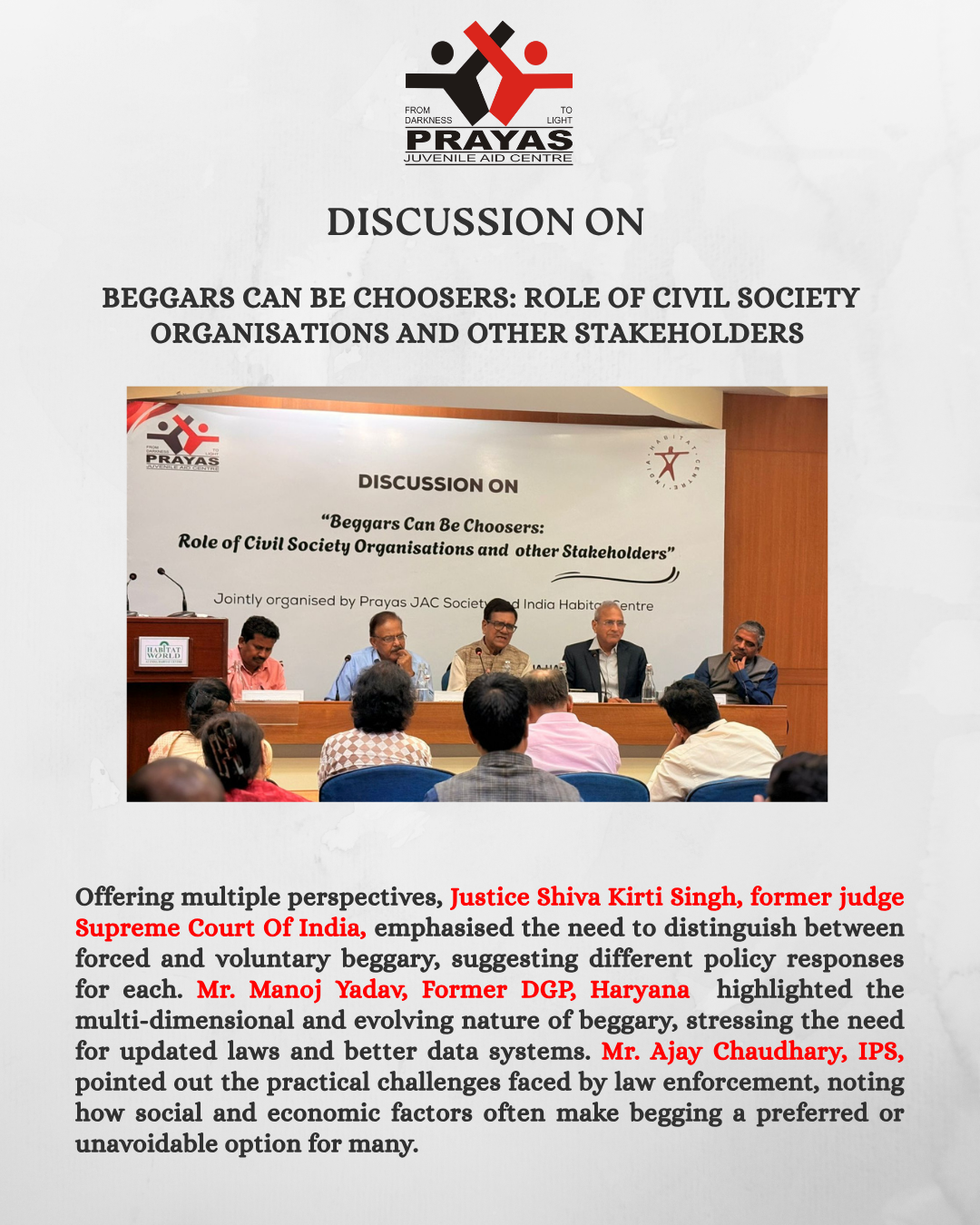
Legal & Judicial Perspectives
Justice Shiva Kirti Singh underscored the need to distinguish between forced and voluntary beggary. Mr. Manoj Yadav and Mr. Ajay Chaudhary highlighted legal, data, and enforcement challenges including gaps in data collection and inconsistencies in legal interpretation across states.
The law must protect the vulnerable — not punish them for their poverty.
Conclusion
The discussion concluded with a consensus to reframe beggary as a socio-economic issue, prioritising dignity, inclusion, and collaborative action for sustainable change. Participants agreed on moving beyond punitive approaches and building systems that restore dignity through welfare convergence, legal reform, and community-led rehabilitation.